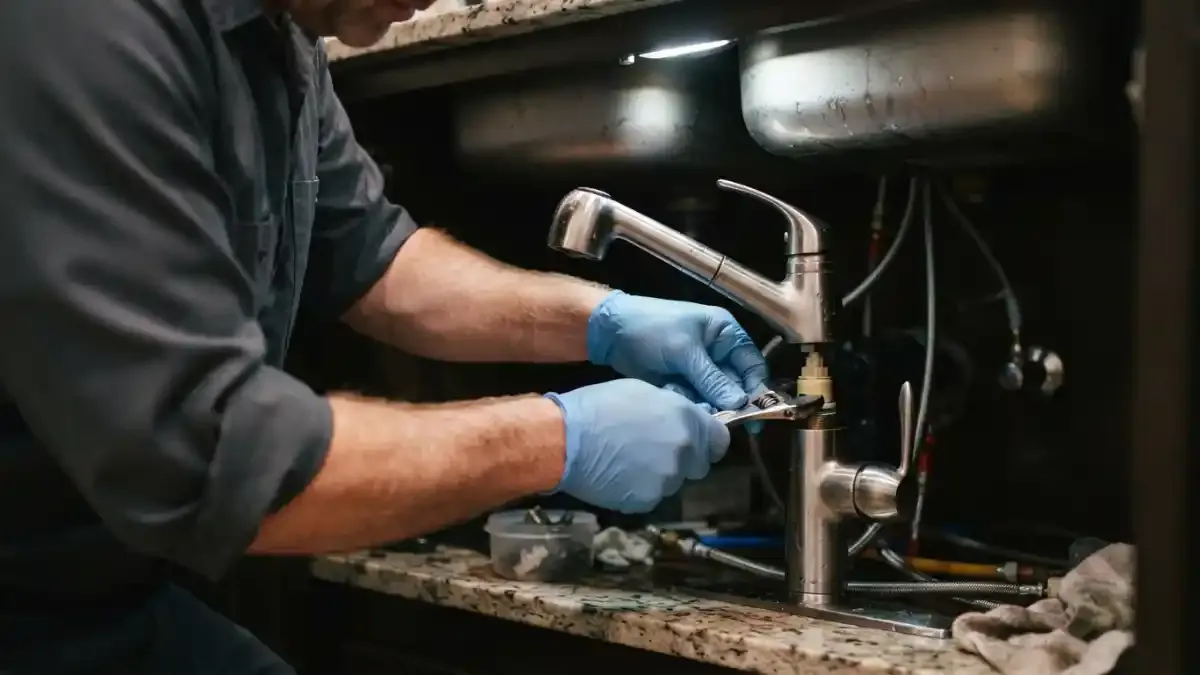
Kitchen Sink Plumbing Replacement in Syracuse, UT
When you replace a kitchen faucet, the parts under it have the same age. Here is what to replace together, and what can wait.
The parts under a kitchen sink
A kitchen sink looks simple, and it hides five parts that wear out on different schedules: the faucet, the supply lines, the shutoff valves, the trap and drain, and often a garbage disposal. If one of these is old, the others usually are too, and replacing them together saves a second visit.
This guide explains what to replace and when, so you can plan a sink swap or understand a plumber's quote.
Parts worth swapping at the same time
- Supply lines: braided lines wear out, and a burst line floods a cabinet.
- Shutoff valves: old valves seize or leak when you finally turn them.
- The trap: a corroded or cracked trap leaks and smells.
- The faucet, if it drips, leaks at the handle or has low flow.
Replace the supply lines every time you change the faucet. They cost little next to the water damage they cause. See faucet repair for how that visit goes.
How a replacement goes
Shut the water
Close the stops, or the main if they will not turn.
Remove
Disconnect the supply lines, the drain and the old faucet.
Install
Set the new faucet, connect new supply lines and rebuild the trap.
Test
Run hot and cold, check every joint and run the disposal if there is one.
If the shutoff valves will not close, the job pauses until they are replaced. A seized valve is a common reason a simple swap becomes a longer visit.
Sink job on your list?
Call to get a scope and a clear price before work starts.
If you have a disposal
A disposal sits between the sink and the trap, so it affects the drain layout. If the unit is more than a few years old or has started to hum, replace it with the sink. See garbage disposal repair and replacement for how we decide.
The dishwasher drain ties into the disposal or the drain, so we reconnect it and test for leaks.
Newer Syracuse homes and what is under the sink
Syracuse had 3,702 residents in 1990 and nearly 40,000 today, so most kitchens were built in the last thirty years. That usually means plastic traps and braided supply lines, and those tend to fail by leaking at a joint and not by corroding through. Check the connections under the sink once a year with a dry paper towel.
If you live in a newer home and see white crust at a joint, hard water is leaving deposits, and a water softener may be worth discussing. The state water documents give no hardness figure, so test your tap before you spend money.
Source type: Utah history encyclopedia and census data
Choosing a faucet that will not cause trouble
- Check the sink for the number of holes before you pick a faucet.
- Pick a faucet with replaceable cartridges, so a repair is a part and not a swap.
- Skip pull-down models with a plastic hose if you cook heavily.
- Ask the installer which supply lines they will use.
If you want a plumber to supply and install, call and tell us the sink type.
What happens if you put it off
Old supply lines and valves fail without warning. A split line under a sink can run for hours while a household is at work, and the water spreads into the cabinet floor and the room next to it.
If your kitchen has braided lines more than a decade old, or valves that have not been turned in years, plan the swap before they fail. It is a short visit and avoids a messy emergency.
Order the work so nothing is done twice
If you plan new countertops or a sink swap, schedule the plumbing before the countertop goes in and again for the final connection. A rough-in check beforehand catches a drain in the wrong spot while it is still cheap to move.
Replace the shutoff valves and supply lines during the first visit. Make the final faucet and drain connections after the sink is set. That is two short visits and no surprises.
Traps, vents and slope under the sink
Utah's state construction code amends the International Plumbing Code (IPC) for use statewide, under Utah Code Title 15A, Chapter 3, Part 3. A trap that is too far from its vent or a drain that does not slope will gurgle and smell, and no new faucet will fix that.
Kitchen sink questions
Yes. New lines cost little, and old ones are a flood waiting to happen.
Many homeowners do. The tricky parts are seized shutoff valves and tight cabinet access.
Stop and replace them. A leaking stop will not hold, and forcing it risks a flood.
A dry or dirty trap, a food-fouled disposal or a vent problem. A plumber checks each.
Yes. We replace them with the faucet, or on their own if they leak.
Plumbing help that matches this guide
We cover Syracuse and nearby towns on one number. See the full service area list or call (385) 488-1892 any hour.