Water Softener and Filtration in Syracuse, UT
Water softener installation, repair and testing for homes with scale, spotting and dry skin, plus honest advice on whether you need one.
Water softeners in Syracuse, UT
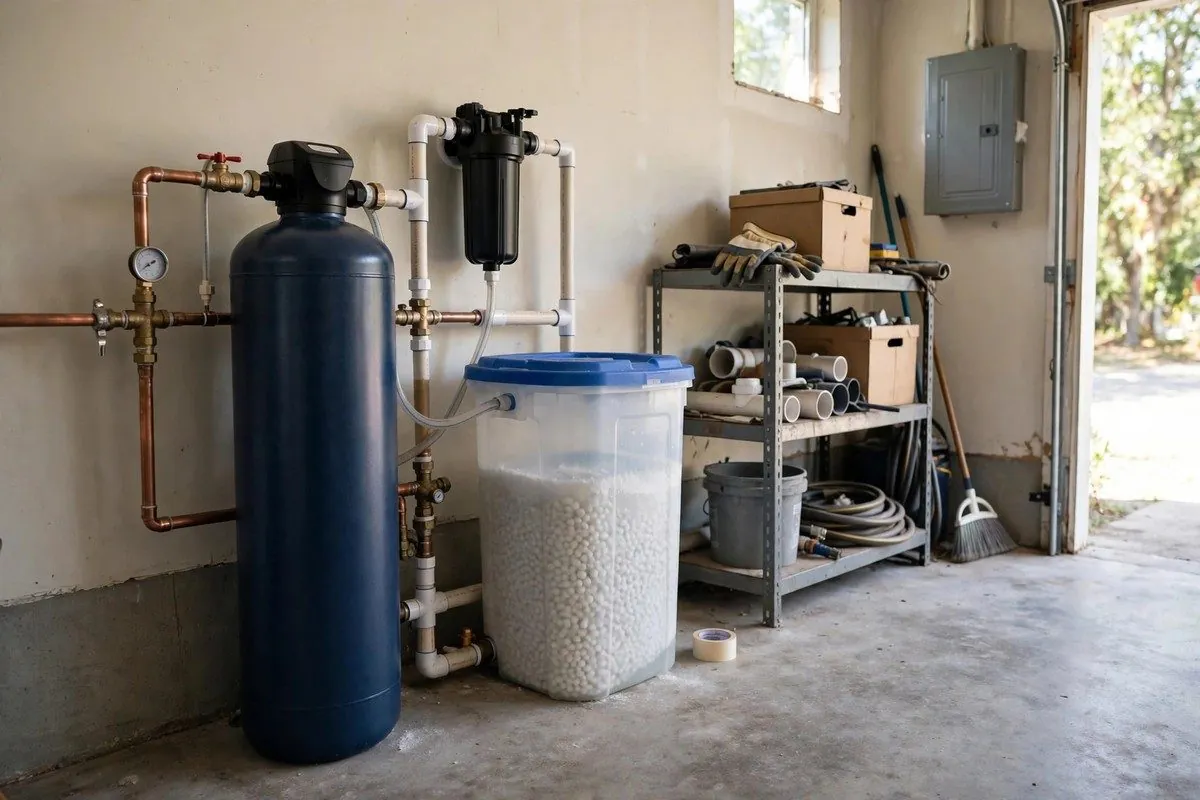
A softener removes hardness minerals that leave scale in pipes, fixtures and the water heater. Before anyone sells you one, test the water. Without a test, you do not know whether you need a softener, a filter or nothing.
Syracuse's culinary water comes from city Well #3 and Weber Basin purchased water. The state documents we found give no hardness figure, so we do not quote one. Ask Syracuse City Public Works what the supply looks like, then test your tap.
Signs of hard water
- White crust on faucets and showerheads.
- Spotting on dishes and glass.
- Soap that will not lather well.
- Scale in kettles and the water heater.
- Dry skin and stiff laundry.
Scale shortens the life of a water heater, and flushing it helps. See water heater repair for what scale does inside the tank.
Want to know your water?
Call to book a test and a straight answer.
Softener, filter or conditioner
Salt-based softener
- Removes hardness minerals.
- Needs salt and a drain.
- Adds some sodium to the water.
Filter or conditioner
- Targets taste, chlorine or scale formation.
- No salt or drain in many models.
- May not remove hardness itself.
We tell you which option fits your test result, and we also tell you if you do not need one.
Keep softeners off the irrigation line
Syracuse homes have two water systems: culinary water for the house and pressurized secondary water for the yard. A softener belongs on the culinary line only. Softening irrigation water wastes salt and does nothing for lawns.
We set the unit to treat the water that feeds sinks, showers and the water heater, and we keep the outdoor spigots on an untreated line when the layout allows it.
Keeping a softener working
- Check the salt level monthly and break up any bridging.
- Clean the brine tank once a year.
- Set the regeneration schedule to your water use.
- Test the water yearly to confirm it still works.
- Call for repair if you see scale return.
Some manufacturers require periodic service to keep a warranty, so check the paperwork.
What a water test number means for your decision
Hardness is reported in grains per gallon or milligrams per liter. Light hardness rarely justifies a softener. Moderate hardness leaves visible spotting and shortens appliance life over years. Heavy hardness builds scale fast, and a softener usually pays for itself in saved repairs.
Ask the tester to report iron, chlorine and total dissolved solids too. Iron stains fixtures and fouls softener resin, so it changes which unit you buy. A plumber can read the whole sheet with you and tell you what to ignore.
Test water from the kitchen cold tap, not from a tap that passes through an existing treatment unit. If you already own a softener, test both before and after it.
What a softener install involves
Choose the spot
Near the main water entry, with a drain and an outlet within reach.
Bypass and shutoffs
A bypass valve lets you isolate the unit for service.
Drain line
The regeneration cycle needs an air gap and a proper drain connection.
Program and test
We set the hardness, the regeneration schedule and check for leaks.
Placement matters in cold weather. A softener in an unheated garage can freeze and crack, so we pick a protected spot or insulate the area.
Water softener questions
Yes. The line is answered 24/7. A softener leak is an emergency if it floods a room, so shut the bypass and call.
Test the water first. If the hardness is low, a softener will not be worth it.
Salt-based softeners add some sodium, and many homes keep a separate tap for drinking water. We explain the options.
Yes. Many failures are the valve, the brine line or a resin bed that is spent.
It reduces scale buildup, which helps the heater last. It does not replace maintenance.