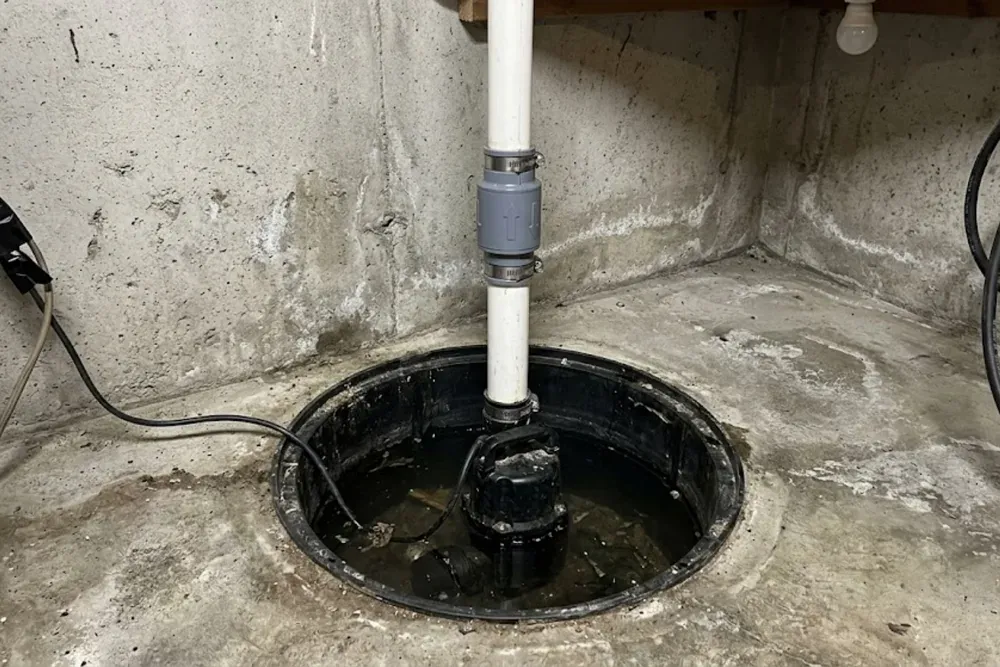
Emergency Sump Pump Repair in Syracuse, UT
Sump pumps installed, repaired and tested before the spring runoff and summer storms, with battery backup for the day the power goes out.
Sump pump failed, water rising
Emergency sump pump service in Syracuse, UT is answered 24/7. A failed pump during a storm or snowmelt puts a basement at risk fast, so act on the safe steps and call.
- Stay out of standing water if outlets or appliances are near it.
- Check that the pump is plugged in and the breaker has not tripped.
- Lift the float to see if the pump starts. If it does not, the pump or the switch has failed.
- Move valuables up, and call the line.
Common sump pump failures
Stuck float
Debris or a tilted pit jams the float, so the pump never starts or never stops.
Burned-out motor
A pump that runs constantly for years wears out.
Clogged intake
Silt and gravel choke the pump.
Failed check valve
Water flows back into the pit and the pump cycles on and off.
No power
A storm that kills the power kills the pump without a backup.
Test the pump by pouring a bucket of water into the pit, and do it before the wet season.
Pump quit during a storm?
Call the 24/7 line. We repair or replace the pump.
Backup power and second pumps
Battery backup
- Runs when power fails.
- Needs a battery check each year.
- Hours of run time depend on the battery.
Water-powered backup
- Uses municipal water pressure.
- Needs a city water connection and a drain.
- Not an option everywhere, so ask first.
Whichever you choose, the discharge must go somewhere safe. Pointing it at a neighbor's yard or into the sanitary sewer causes problems, and we plan the discharge with you.
Why Syracuse basements take on water
Syracuse sits near the Great Salt Lake shoreline, where the North Davis Sewer District plant is also located, and snowmelt and canal irrigation add water to the ground. We have no sourced figure for local groundwater depth, so we do not quote one. Ask us to check the pit and sump setup, and ask Syracuse City Public Works about drainage rules for discharge.
If water keeps coming through walls or floors, a pump alone may not be enough. Basement waterproofing covers the longer fix.
Yearly pump checklist
- Pour water into the pit and watch the pump start and stop.
- Clean the pit and the intake.
- Check the discharge line for ice and blockage.
- Test the battery on a backup.
- Listen for odd noises and replace pumps that run rough.
Pedestal or submersible
Pedestal pump
- Motor sits above the pit.
- Easier to service and lower cost.
- Louder and more visible.
Submersible pump
- Motor sits inside the pit.
- Quieter and handles more water.
- Harder to reach for service.
Most finished basements use a submersible unit because it is quiet. A pedestal unit suits a basement that is not finished and where access is easy. We recommend based on how you use the space.
Before the wet season starts
Test the pump in early spring and again before the first big storm. Clear the pit of silt, check the float moves freely and confirm the discharge line is not buried or frozen. A few minutes of testing finds most failures before they flood a basement.
Where sump water is allowed to go
Utah's state construction code amends the International Plumbing Code (IPC) for use statewide, under Utah Code Title 15A, Chapter 3, Part 3. Rules differ on sending pump discharge to the sanitary sewer, and many places prohibit it because it overloads the system.
Ask Syracuse City Public Works where discharge is allowed on your lot. We route it to a place that meets the rules and stays clear in winter.
Sump pump questions
Yes. The line is answered 24/7. Call, and keep out of any water near electrical outlets.
Usage matters most. A pump that runs often wears out sooner, and an annual test helps catch trouble early.
Yes, though it involves cutting the slab. We assess the drainage first.
Away from the foundation and not into the sanitary sewer. We help plan a safe route.
If your basement has flooded or you finish it as living space, a backup is worth considering.
Related plumbing help
Sump pump down?
Call the 24/7 line. We repair or replace it and test it before you leave.
Call (385) 488-1892