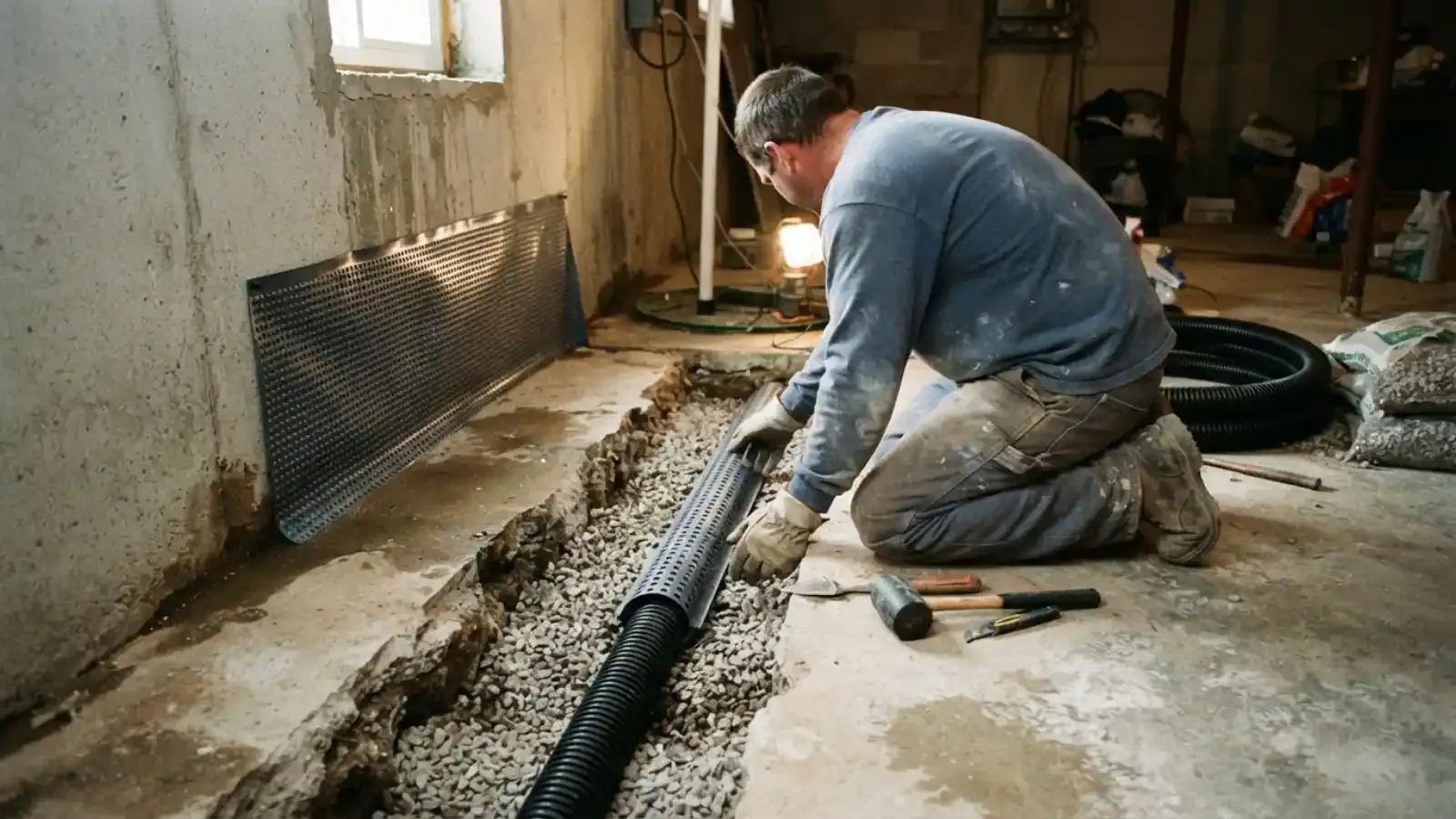
Basement Waterproofing in Syracuse, UT
Drainage, grading, sealing and pumps that keep water out of basements, planned after finding where the water comes from.
Basement waterproofing in Syracuse, UT
Waterproofing starts with finding where the water comes from. A basement can take on water from the surface, from a high water table or from a plumbing leak, and each needs a different answer. We look at the pattern before proposing anything.
If water is rising now, see sump pump service and call the 24/7 line. This page covers the permanent fixes that follow.
Four places basement water comes from
Surface runoff
Soil that slopes toward the house, or downspouts that dump at the foundation.
Wall seepage
Water pushing through cracks or the wall-to-floor joint after heavy rain or snowmelt.
Rising groundwater
Seepage from the floor that follows the seasons.
Plumbing leaks
A hidden supply or drain leak that looks like seepage. See leak detection.
Not sure where it is coming from?
Call to schedule a look. We trace the source before we recommend anything.
What fixes which problem
| Problem | Fix | Notes |
|---|---|---|
| Runoff at the foundation | Regrade soil, extend downspouts | Cheapest and most effective first step. |
| Wall cracks | Seal and repair | Cracks that keep moving may need further review. |
| Floor seepage | Interior drain and sump pump | Collects water and moves it out. |
| Persistent groundwater | Drain system with backup pump | Needs a safe discharge point. |
We explain which fixes we do and which need an excavation or foundation specialist. A fix that does not match the cause only hides the problem for a season.
Irrigation, grading and the wet basement
Syracuse yards are irrigated from May to October with pressurized secondary water, and overwatering beside a foundation is a common reason for a damp basement. Aim sprinklers away from the house and keep soil sloped down and away.
Syracuse City Code ties new home sprinklers into the secondary system and requires irrigation leaks to be repaired within 15 days of notice. A leaking sprinkler line beside the foundation is a repair to make before any waterproofing work.
How a waterproofing project goes
Inspect
We look inside and out, and ask when the water appears.
Plan
You get a written scope and a clear price before work starts.
Install
We do the drainage, sealing or pump work in the scope.
Test
We run water to prove the system works.
What you can check before anyone digs
- Walk the foundation after a hard rain and look for pooling water.
- Check that downspouts discharge several feet from the wall.
- Look at window wells for debris, standing water and cracks.
- Check the floor drain and the sump pit for blockage.
- Note where and when the basement gets damp, and write it down.
That log is useful. A basement that is damp only after irrigation season points to the yard. One that is damp in spring points to snowmelt and groundwater. We use your notes to narrow the cause.
What waterproofing can and cannot promise
Drainage and pumps reduce water entry, and they depend on power, maintenance and the water load. A basement fix is not a promise against every storm. We tell you what a system is meant to handle and what it is not.
Foundation cracks that keep widening, walls that bow inward and floors that heave are structural signs. They call for a structural engineer, and we will say so honestly before selling any waterproofing.
Basement waterproofing questions
Yes. The line is answered 24/7. Stay out of water near outlets and call.
No. Condensation and plumbing leaks cause dampness too. We check those first.
If water collects at the floor, a pump usually moves it out. We confirm after the inspection.
Often, if the water comes from surface runoff. It is cheap and worth trying first.
It reduces water entry, but no system is a promise against every storm. We explain what to expect.